
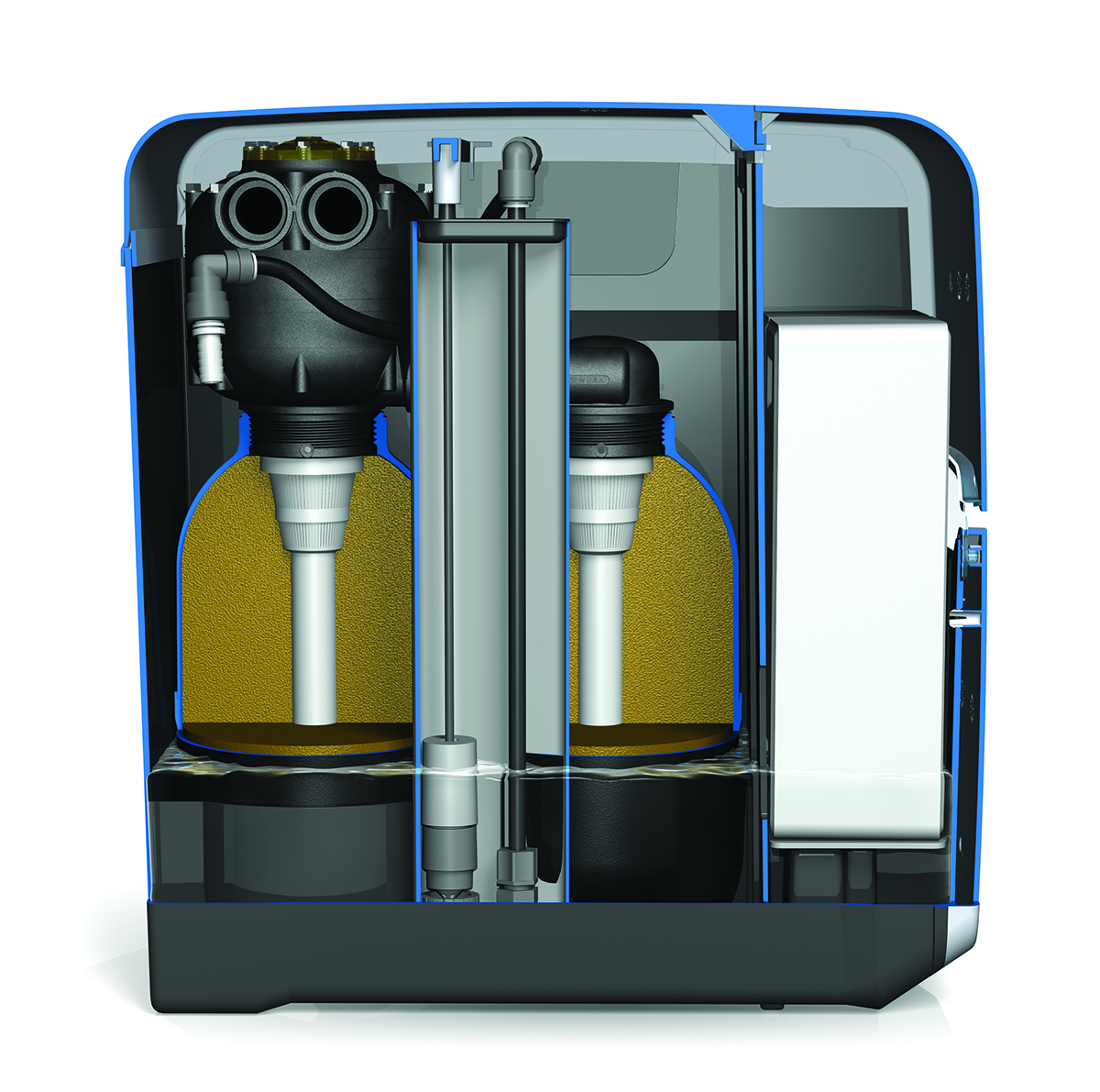
You have probably heard people using the terms softener, conditioner, and filter interchangeably. However, they are not the same. Are you dealing with hard water and trying to determine what you actually need? Then the first thing you need to understand is the differences between the terms stated above and a softener like the Kinetico compact.
This mix-up is quite common. After all, these products claim to solve the same problems. It is the way each one works that differentiates the results.
An overview: how a water softener removes hardness
Most water softeners work through a process called ion exchange. When water passes through the system, it replaces the minerals responsible for hardness with sodium ions. The water you get, as a result, is genuinely soft.
The process utilises salt and a regular regeneration cycle to keep working. This proven method makes water feel noticeably different on skin and in appliances almost immediately.
How is the approach of a water conditioner different
A conditioner is nothing like the Kinetico Premier Compact. Instead of removing the minerals responsible for hardness, a conditioner alters their structure. In doing so, it makes those minerals less likely to stick to surfaces or form scale. They simply remain in the water and behave differently after conditioning.
Salt-based ion exchange process
A softener physically removes minerals causing hardness directly from the water supply. It is the only way you get water that is entirely free of calcium and magnesium. If you use a conditioner, you only eliminate the scaling effect on appliances and surfaces without removing the minerals.
No salt or regeneration cycle
Conditioners do not require salt, and they do not go through a regeneration process, either. For numerous households, especially those who want a low-maintenance option, a conditioner is much more appealing. Others, however, favour softeners because they think conditioners do not do a thorough job.
Effect on skin, hair, and taste
Softened water feels entirely different. When you bathe in it, your skin will feel much softer. If you wash your hands in softened water with soap, you will have fewer residues to deal with. Even tea made using soft water tastes better. Conditioners, on the other hand, do not offer the same experience because the minerals remain in the water.
Maintenance and running costs
Using a softener means you need to top it up with salt periodically. It also yields a small quantity of wastewater during regeneration, but conditioners avoid both. A conditioner bypasses both aspects at the cost of a less dramatic effect on the water.
As you can see, both options are useful in one way or another. Before you choose one, you have to know the problem that you are trying to solve. Those who want to avoid limescale build-ups on their appliances will benefit from a conditioner. Others looking for genuinely soft water and all the benefits it has to offer should use a Kinetico compact. Kinetico is currently one of the country’s leading manufacturers of water softeners. Explore both Kinetico Premier Plus and Premier Compact at Aqua Sensation, a local supplier of water softeners operating in Bedfordshire and Hertfordshire for over 25 years.
Contact us to learn more about our products.